


15th Field Artillery Regiment The Indianheads
Post-World War One / Pre-World War Two
Following a short tour of duty as Occupational Troops on the Rhine River in Germany after WW-I, the 2nd Infantry Division (ID) returned to the United States in August 1919. The Division was then stationed at Fort Sam Houston, Texas and then Camp Travis, Texas, where it remained in garrison for 23 years.
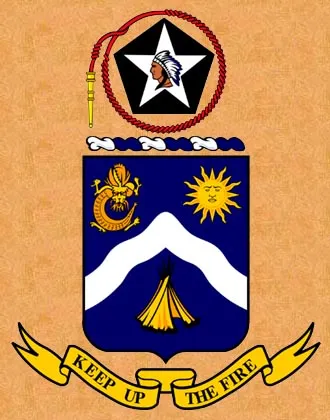
In 1940, the 2nd ID became the first "Triangular Division" with the 9th, 23rd, and 38th Infantry Regiments. Subsequently, the 15th Field Artillery (FA) Regiment was reorganized and divided as the 37th FA Battalion (Bn), the 38th FA Bn, and the 15th FA Bn. With the 12th FA Bn, these four Battalions formed the 2nd ID Artillery.
In November 1942, the 2nd ID moved to Camp McCoy, Wisconsin, and trained in a series of Cold Weather Maneuvers, and deployed overseas to Ireland in October of 1943. After extensive training, the 2nd ID hit the beach at Normandy on 7 June 1944. The 15th FA Bn became the first Artillery Unit of the 2nd ID to fire its guns at the Germans on 9 June 1944. And the rest, as they say, is History!
Written by: Dan Gillotti, 15th FA Historian
On 10 October 1940, the 15th Field Artillery (FA) Regiment was reorganized at Fort Sam Houston, TX, as the 15th FA Battalion (Bn). The 15th FA Bn was ordered to Camp McCoy, WI, on 16 October 1942, for intensive training with the 2nd Infantry Division.
Movement overseas came on 8 October 1943, when the 15th FA Bn sailed from New York onboard the SS Hawaiian Shipper for Belfast, Northern Ireland, where it trained for several months. Embarkation for Porthcawl, Wales, followed on 17 April, 1944. As part of the 9th Regimental Combat Team (9th Infantry Regiment & 15th FA Bn), the 15th FA Bn landed at Omaha Beach near St. Laurent-Sur-Mer, France, on D Day +1 (7 June 1944). The 15th FA Bn fought for 73 straight days in support of the 2nd Infantry Division throughout Normandy without a break. Their first break in the combat action came on 19 August 1944, when the 15th FA Bn was ordered to move 220 miles and occupy firing positions for the battle against the German fortress at Brest, France. The battle that ensued was bloody and hard fought by all elements of the 2nd Infantry Division including the 15th FA Bn. On 26 September 1944, five officers and 42 enlisted men of the 15th FA Bn were presented Bronze Star Medals, by the Division Commander, for their actions since D-Day +1.
Following this, a 770 mile road march began on 27 September 1944 and carried the 15th FA Bn to Schoenberg, Belgium. By 4 October 1944, the 15th FA Bn crossed into Germany and opened fire on elements of both the 2nd and 3rd SS Panzer Grenadier Divisions. On 17 December 1944, the 15th FA Bn fought as an integral part of the 2nd Infantry Division’s attack on the Siegfried Line near Elsenborn. By 1 February 1945, the area known as Heartbreak Crossroads was taken after a multi-divisional battle.
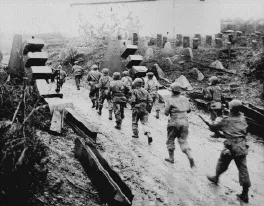
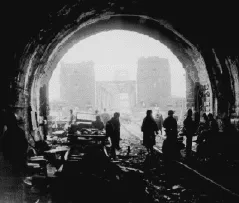
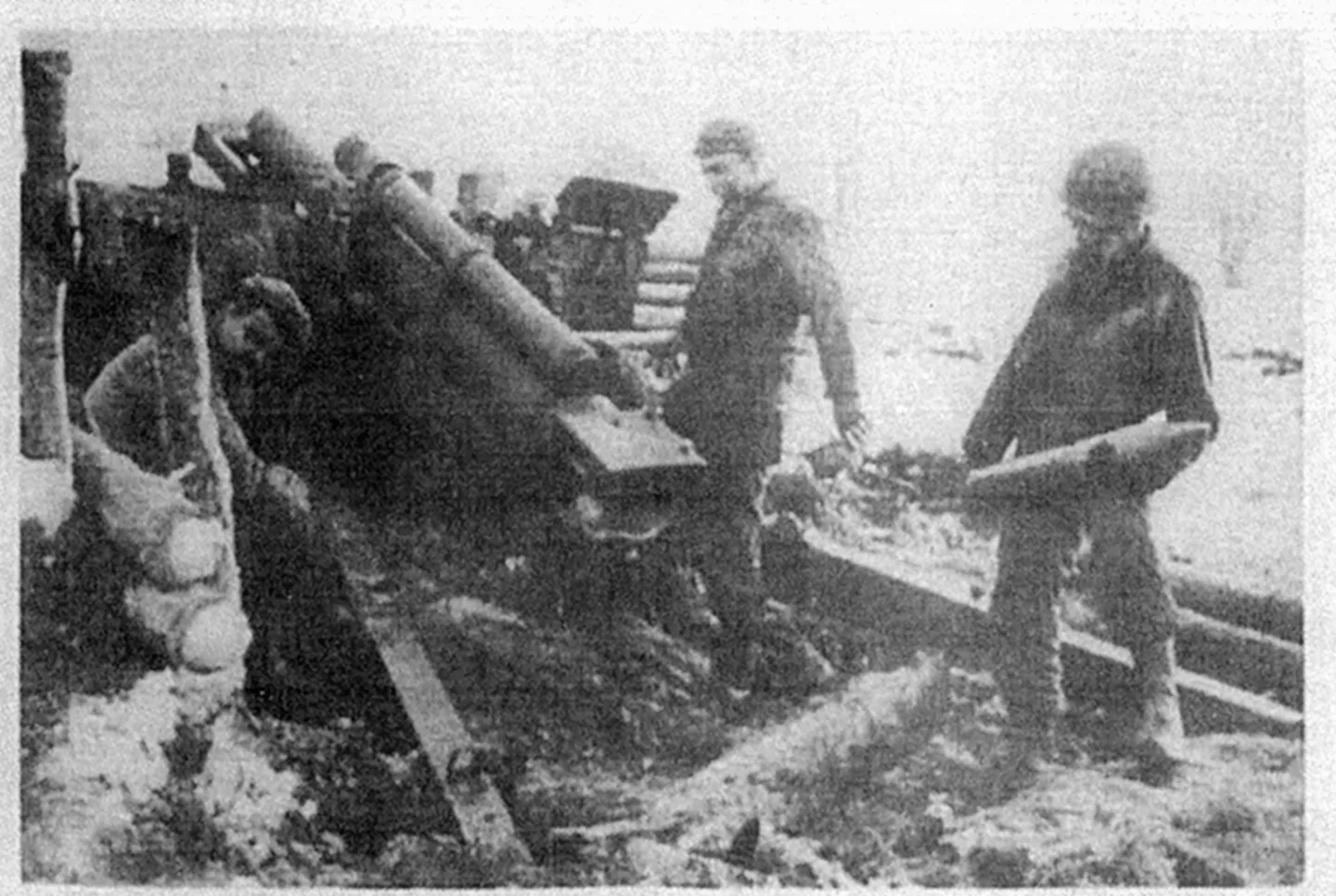
On 21 March 1945, the 15th FA Bn crossed the Rhine River into Germany on a pontoon bridge near Remagen, and took up firing positions near the town of Leutesdorf. After several heavy engagements, the 15th FA Bn moved to new firing positions at the town of Vaake, near the Weser River, arriving there on 7 April 1945. Throughout the remainder of April 1945, the 15th FA Bn moved many times and even had to engage the enemy with direct fire from its howitzers. By 5 May 1945, the 2nd Infantry Division moved into Czechoslovakia along with the 15th FA Bn. The war was officially over on 8 May 1945.
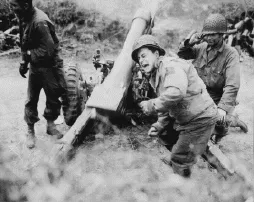
As their contribution to help defeat the forces of evil and to win WW-II, the 15th FA Bn was in combat for 336 days and fired 151,000 rounds while providing direct fire support to the 2nd Infantry Division and general support to several other divisions. For their efforts and sacrifices the 15th FA Bn was awarded streamers for five major campaigns during WW-II including: Normandy; Northern France; Rhineland; Ardennes-Alsace; and Central Europe.
Additionally, the 15th FA Bn was awarded the Belgian Fourragere, and was cited in the Order of the Day of the Belgian Army for extraordinary combat action in the battle of the Ardennes and Elsenborn Crest. Individual decorations awarded to members of the 15th FA Bn during WW-II included: 6 Silver Star Medals; 91 Bronze Star Medals for Gallantry; 83 Bronze Star Medals for Meritorious Service; 20 Air Medals; and 170 Purple Hearts.
All of the honors earned by the 15th FA Bn and its members during WW-II did not come cheaply as twenty-nine (29) members of the 15th FA Bn were killed in action. The Indianheads of the Fighting Fifteenth had paid their dues - Again!
Written by: Dan Gillotti (15th Historian)
Elsenborn - Battle of the Bulge
This an official accounting of the 15th FA during the Battle of Bulge specifically at Elsenborn written by MG Robertson to which the 15th should've been awarded a Presidential Unit Citation as they supported the 2nd BN 9th Infantry Regiment who received a Presidential Unit Citation for their actions at Elsenborn.
The battalion's first offensive action since Brest and the bitter defensive fighting which followed it, proved to be one of the outstanding pages in the history of the 15th Field Artillery.
Taking up positions in the snow-covered forest between Kalterherberg, Germany, and Elsenborn, Belgium, the battalion drew up plans for the attack of the Wehlerscheid Crossroads to conform with a right hook maneuver to be executed by the 9th Infantry. Under the hum of buzz bombs and through deep snow and thick forests the battalion's Forward observers and liaison crews advancing with 9th Infantry doughboys kept up a continuous stream of preparation, harassing and observed fireson the enemy positions. After a heavy pounding and cratering of the area, the vital pillboxes of the crossroads were captured after a, daring night attack on December 15th. For this action the 2nd Battalion 9th Infantry was awarded the Presidential Unit Citation and as always the 15th Field Artillery Battalion contributed to the success of the operation.
The success at Wehlerscheid was fleeting, for at dawn on December 16th a barrage of enemy artillery swept the battalion's positions following an enemy thrust in the Hofen sector. At 1220 hours, higher headquarters reported the enemy hitting all along the line in the Schnee Eiffel area. The 17th of December, a memorable day in battalion history, brought news at 0410 hours of paratroop landings in the rear areas, and morning alerts of expected enemy tank attacks was received. Air, sections at Bullingen airport were advised to leave at 0845 hours. Lt. Bennett, heading for his plane, found the field already covered with enemy tanks and infantry. Gaining cover behind a truck, he vaulted a high wire fence and sprinted with the enemy all around him to our lines, which he reached successfully. By 1030 hours, the airport was in enemy hands while the largest groups of enemy aircraft yet seen by the, 15th Field Artillerymen hovered over the sector. With tank attacks threatening the division right flank, troops were obliged to withdraw from hard-won Wehlerscheid, which thereafter bore the name "Heart Break Crossroads."
The full weight of the German attack fell when four crack divisions, plowing swiftly through the crust of a flanking U. S. Division closed with the 2nd Infantry Division defending the Rockerath-Krinkelt area with every available man and weapon.
The necessity of redeploying the 9th Infantry from Wehlerscheid being paramount, the 15th Field Artillery laid down a shattering barrage of neutralizing fire to the northeast under which the infantry withdrew to defensive positions with a minimum of loss. When this was accomplished, fire was shifted to enemy routes toward Hofen where the Germans were mounting an assault.
From hastily prepared positions northeast of Rockerath 1st Lt. John Granville reported the first tanks approaching and for the next 9 hours he directed the continuous fire of all artillery that the 15th could muster in and about his own position. By his gallant and able action in conjunction with the confident and valorous infantrymen of CBT 9, a monstrous enemy assault was beaten off with terrific losses. As this attack was turned early on December 18th, another blow was struck at Hofen and guns were shifted from south to north in order to stop the offensive German armor. At 0740 hours, through a wall of artillery projectiles erected by Lt. Granville's direction, the Panzers attacked Rockerath. Shifting the center of impact over a 3200 mil sector to meet the unprecedented quantity of Germans and tanks the furious defense slowed and then finally halted the enemy.
During this action, ammunition flowing through the 105 tubes melted the reserve like butter and when word was received that the depot had been abandoned to the enemy and a full-day’s run was required from the next available dump, the ammo train requested permission and hauled without escort from the abandoned depot every available round while the enemy hovered on three sides.
During the continuous assault at Rockerath the situation at Hofen become so critical that a task force consisting of 9th Regimental Cannon Company, divisional reconnaissance troops and a makeshift infantry company was organized and placed under command of LTC Cassibry, 15th Field Artillery Commanding Officer, with left flank defense for the 2nd Infantry Division as its mission. The 15th Field Artillery formed an integral part of this force while continuing its primary mission.
At one time during the defense of Hofen, so much German voice communication broke into our radio channel that a plan was hastily conceived which may have had vital results. Pvt. Burian, German-born battalion member of Headquarters Battery, went on the air and duplicating the enemy radio procedure, transmitted a message directing the Panzers to return to their assembly area. At least this broadcast must have confused the enemy, for shortly thereafter German activity showed a marked decrease.
The paramount need for artillery necessitated a move to less exposed positions and in the evening of December 18th a move was ordered, with reconnaissance and displacement accomplished on a dark moonless night over routes constantly shelled by heavy enemy guns. This assignment was rapidly carried out and fire resumed on enemy troops. Throughout the engagement bat- talion communications men, working under the severest conditions of weather and enemy action, served not only the artillery but provided the infantry's only means of contact during the most critical hours.
Of the above action a commendation by the Division Commander, Major General Walter M. Robertson, states:
"I desire to commend 15th Field Artillery Battalion for outstanding performance of duty in combat operations against a highly trained and tenacious enemy during the period 17 December 1944, to 19 December 1944, in the BULLINGEN-KRINKELT—ROCHERATH area. The detailed resume, presented by the Commanding General, 2d Infantry Division Artillery follows:
On the morning of 17 December 1944, the 15th Field Artillery Battalion, was in position 1500 yards to the north of ELSENBORN, from which position it had supported the attack of the 9th Infantry Regiment to the northeast. This attack culminated in the capture of a heavily fortified segment of the SIEGFRIED LINE prior to daylight, 17 December 1944. Shortly thereafter, word having been received of the serious breakthrough and consequent threat to the south, the 9th Infantry Regiment was ordered to prepare a compact defensive position in place to withstand an anticipated large scale attack from the northeast.
Shortly after daylight, 17 December 1944, leading elements of an enemy Corps appeared to the immediate right (south) flank of the division, within 1000 yards of the Division Command Post. The division at this time was greatly extended in attack formation and consequently was extremely vulnerable. The initial appearance of the enemy was repulsed, but their appearance presaged the early arrival of enemy forces in.strength and dictated the necessity for immediate withdrawal of the 9th Infantry to vicinity of ROCHERATH- KRINKELT to defend to the south.
Simultaneous with the threat from the south, the enemy began exerting heavy pressure from the east, complicating the extrication and subsequent withdrawal of the 9th Infantry Regiment. At the same time, probing attacks against our holding forces to the north began increasing in intensity, threatening the very position of the 15th Field Artillery Battalion. The threat was further enhanced by enemy paratroopers, dropped in the MON-SCHAU-HOFEN area, to the immediate north of the battalion.
The 15th Field Artillery Battalion, calling for and utilizing to the utmost reinforcing fires of Division and Corps Artillery as it became available, placed heavy, accurate fires to the front of the 9th Infantry prior to its withdrawal, so effectively as to preclude any enemy attempt to close with our troops. Although the 9th Infantry was occupying a position seized from the enemy only a few days before, and one on which the enemy had his supporting artillery and mortars registered, the fires of the 15th Field Artillery Battalion completely neutralized those weapons, allowing the infantry to effect its withdrawal with a minimum of casualties.
As the withdrawal progressed and elements of the infantry became more widely separated, the supporting problem became correspondingly difficult, requiring trail shifts, in frozen ground, on almost every mission. Ammunition expenditures increased steadily, while ammunition resupply became increasingly difficult due to intense enemy shelling of our roads and strong enemy air activity, including bombing and strafing. By late afternoon ammunition resupply became critical upon receipt of information that the ASP, 8 miles to the south, had been overrun by the enemy with consequent loss of all ammunition there.
By nightfall the 9th Infantry Regiment had succeeded in establishing a line, KRINKELT-WIRTZFELD, facing to the south. Time was available for only the hastiest defensive preparations, and it was fully realized that any success in repulsing a heavy, determined attack was dependent upon maximum artillery support. Failure of communications or inability to maintain the flow of ammunition would result not only in inadequate artillery support but in turn, the collapse of the entire position.
At 2036, the enemy struck ROCHERATH with a vicious tank and infantry assault. Such a volume of artillery fire was placed on the assaulting enemy that tanks and infantry were beaten back with terrific losses. Since there was no visibility, it was not possible to properly adjust the fires, thereby necessitating a continuous screen of fire through which the enemy could not penetrate. Attempts at massive thrusts and infiltration continued throughout the night, with a ferocity and fanatical determination not heretofore experienced. At times, when attacks threatened to press home, Artillery observers with the most forward elements of the infantry called for fires, within less than 100 yards of friendly troops, knowing that no prior registration by the battalion had been possible. Infantry officers and non- commissioned officers called for fires closer than normally deemed safe. Only implicit confidence in their artillery battalion a confidence and mutual understanding born of five years of closest infantry-artillery relationship and 200 days of continuous combat stimulated such action.
That continuous fires were maintained throughout the night and successfully repulsed all enemy assaults under conditions more critical than at any other time in this war, is a tribute to no one individual of this battalion, but rather to the combined efforts of all working with greatest devotion to duty. The ammunition train made repeated trips without escort to an abandoned ASP, obtaining every available round, though enemy troops were on three sides—the trip to the next nearest ASP was too great to permit sufficient resupply of ammunition; wire crews worked continuously, day and night, maintaining communications under severest conditions of weather and enemy action, so that they not only served the artillery, but also provided the infantry its only means of contact during the most critical hours.
At 0520,18 December 1944, the 15th Field Artillery Battalion was called on to give all available support to friendly troops to the north. One half the guns of the battalion were shifted 3000 mils to the north and responded at maximum rate of fire for two hours, aiding materially in repulsing an enemy armored and infantry attack on HOFEN. At 0740, the enemy renewed his attacks against ROCHERATH, again requiring all fires in that sector; fires were delivered in such volume that the enemy attack was completely broken up. At 0857, another enemy attack in force developed against HOFEN and again one-half the guns of the battalion were shifted to the north to aid friendly troops in that sector the remaining guns meanwhile maintaining continuous fires to the southwest.
The situation in the HOFEN area became so critical that a task force consisting of a regimental cannon company, the divisional reconnaissance troop, and a makeshift company of infantry, was organized and placed under command of Commanding Officer, 15th Field Artillery Battalion, with the mission of protecting the left flank of the division. A strong point was organized, with the 15th Field Artillery Battalion forming an integral part, but continuing its primary mission of support to the infantry without a break.
The desperate need for continuing artillery fires dictated the necessity for withdrawal of the battalion to a less exposed position. This move was ordered at 1712. Displacement was made, position occupied, and fires resumed in at hree hour period all including reconnaissance of route and position areas, being accomplished in a dark, moonless night, under constant enemy shelling. The skill and efficiency displayed in this feat alone was extraordinary.
The accomplishment of the 15th Field Artillery Battalion in the above described actions are sincerely believed to have resulted not only in preserving the integrity of the 9th Infantry Regiment, but to have contributed in a large degree to the success of the 2d Infantry Division. Failure in any way on the part of this battalion would have resulted in a successful breakthrough by the enemy to the vital road net leading north and west from ELSENBORN. The magnificent work of this battalion contributed as much as any other single factor in stopping the enemy's drives both from the south against ROCHERATH, and from the east against HOFEN.
It is my opinion that this battalion exhibited outstanding ability, gallantry, devotion to duty and determination in repelling the counterattack launched against the 2d Infantry Division with a minimum loss of American lives and equipment. Throughout the entire period of three days, work was continued without cessation during heavy and frequent concentrations of enemy artillery fire, gun crews continued to man their guns with shells falling about them, communications personnel were constantly patrolling and repairing lines, which were being knocked out by shell fire, with no thought or opportunity to take cover; forward observer parties were well forward in exposed positions with the leading elements of the infantry. In fact, all elements of the battalion exhibited outstanding initiative, aggressiveness and valor in destroying the enemy."
/s/ W. M. Robertson
/t/W. M.ROBERTSON
Major General,U.S.Army, Commanding
15th Field Artillery WW2 Campaign Streamers
- Normandy
- Northern France
- Rhineland
- Ardennes-Alsace
- Central Europe